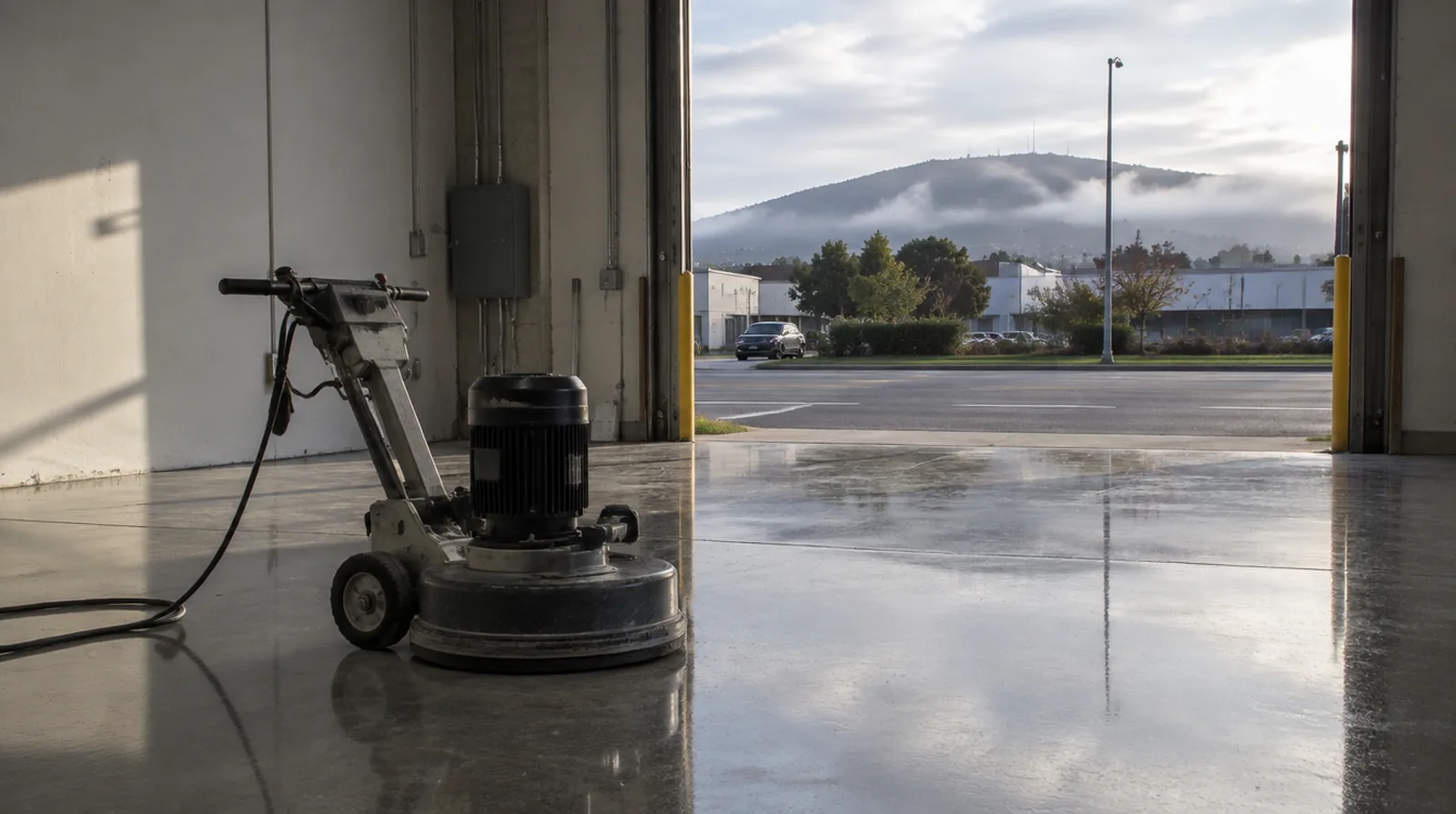
How it is done
We grind the slab in stages, apply a densifier that hardens the surface, and polish to the sheen you want. A guard finish adds stain resistance.
Why it works in a damp climate
Polished concrete has no film coating, so moisture from below is less of a concern. That makes it a good choice for slabs that stay damp.
Where it fits
Offices, lab support areas, warehouses, retail spaces and homes with an open plan.
What it shows
Polishing reveals cracks and patches. For a uniform look, consider a coating.
Is it slippery?
No more than sealed concrete when dry.
How do I maintain it?
Dust mop and use a neutral cleaner.
Warehouses and dust
Unsealed warehouse slabs shed dust onto inventory. Densifying and polishing stops that and makes sweeping and scrubbing easier.
Old industrial slabs east of 101
Some buildings in the older industrial blocks have floors poured decades ago, with saw cuts, embedded rail tracks, patches from removed machinery and oil stains from past tenants. Polishing can turn that history into character, and densifying stops the surface from crumbling into dust. Where a tenant needs a uniform look for a lab or client space, we may recommend a coating instead, or polish the warehouse and coat the office area.
Polished concrete for South San Francisco buildings
Polished concrete suits warehouses, showrooms and modern offices where owners want a durable floor without a coating that can peel. We grind with progressively finer diamonds, densify the slab and polish to the sheen you choose.
What to know before polishing
Old slabs east of the freeway may have patches, saw cuts and stains that will show after grinding. We talk through the expected look and can test a small area first.
Polish questions
Is it noisy? Yes during grinding, so we schedule around tenants.
Can it go in an occupied office? Usually during off-hours, room by room.
Does moisture matter? Less than with coatings, which is one reason polish works well on damp slabs.
Showrooms and retail floors
Polished floors bounce light and make products look sharp, which is why retailers along El Camino Real and Grand Avenue ask about them. Polish also cleans quickly with an auto scrubber and does not need stripping or waxing. We can tint the concrete with dyes during polishing to warm it up or match a brand palette, and we can stop at a satin sheen if a high gloss would show too many footprints in a busy store.
Guarding against spills
A guard product helps resist coffee and oil stains in break rooms and entries.
Polished concrete for South City breweries and taprooms
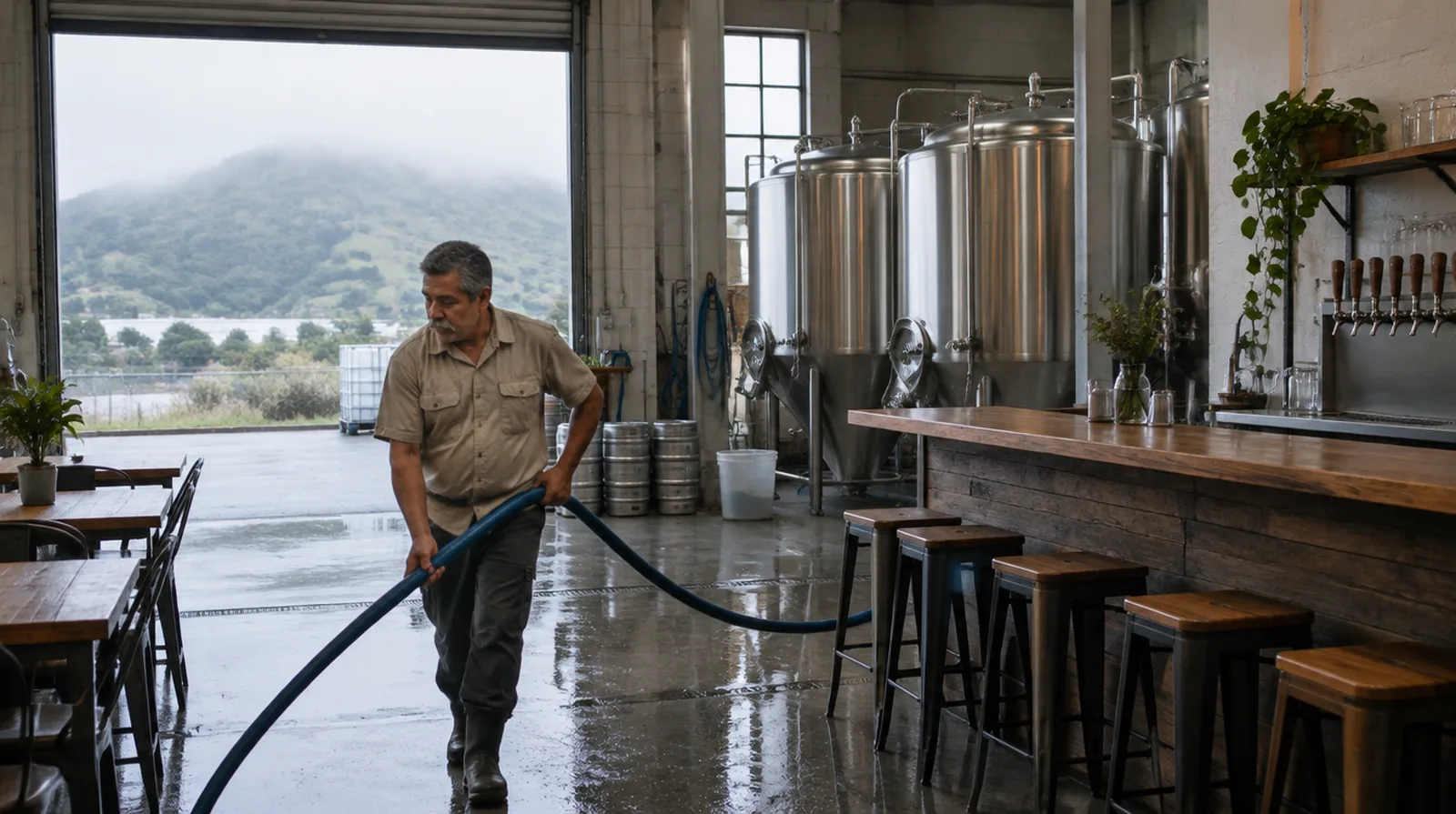
The industrial area east of 101 has seen breweries, taprooms and food businesses move into older warehouse buildings. Polished concrete is a common choice for front-of-house spaces in those buildings.
Why it fits a taproom
A polished slab keeps the industrial character of the building while giving it a clean, finished look. It handles foot traffic, chairs and spilled beer.
Separating front and back
Brewing areas usually need a different floor because of hot water, chemicals and drains. Polished concrete is better suited to the taproom side. We can talk about a coating for the production side.
Old slab character
Older warehouse slabs often have marks, patches and old saw cuts. Many owners like that history showing through. We can show you test areas so you know what to expect.
Spills
A guard applied after polishing helps resist stains. Wipe up spills during service and mop at closing.
Timing
We can work before opening or during closed days. Grinding uses dust collection.
Other uses
Polished concrete also works in restaurants, retail spaces and offices.
Furniture and stools
Bar stools and benches slide around a lot in a busy taproom. Felt or rubber glides under the legs help protect the finish. We can also suggest a shine level that hides scuffs between regular cleanings.
Ask about polished concrete
Call (650) 540-7824.