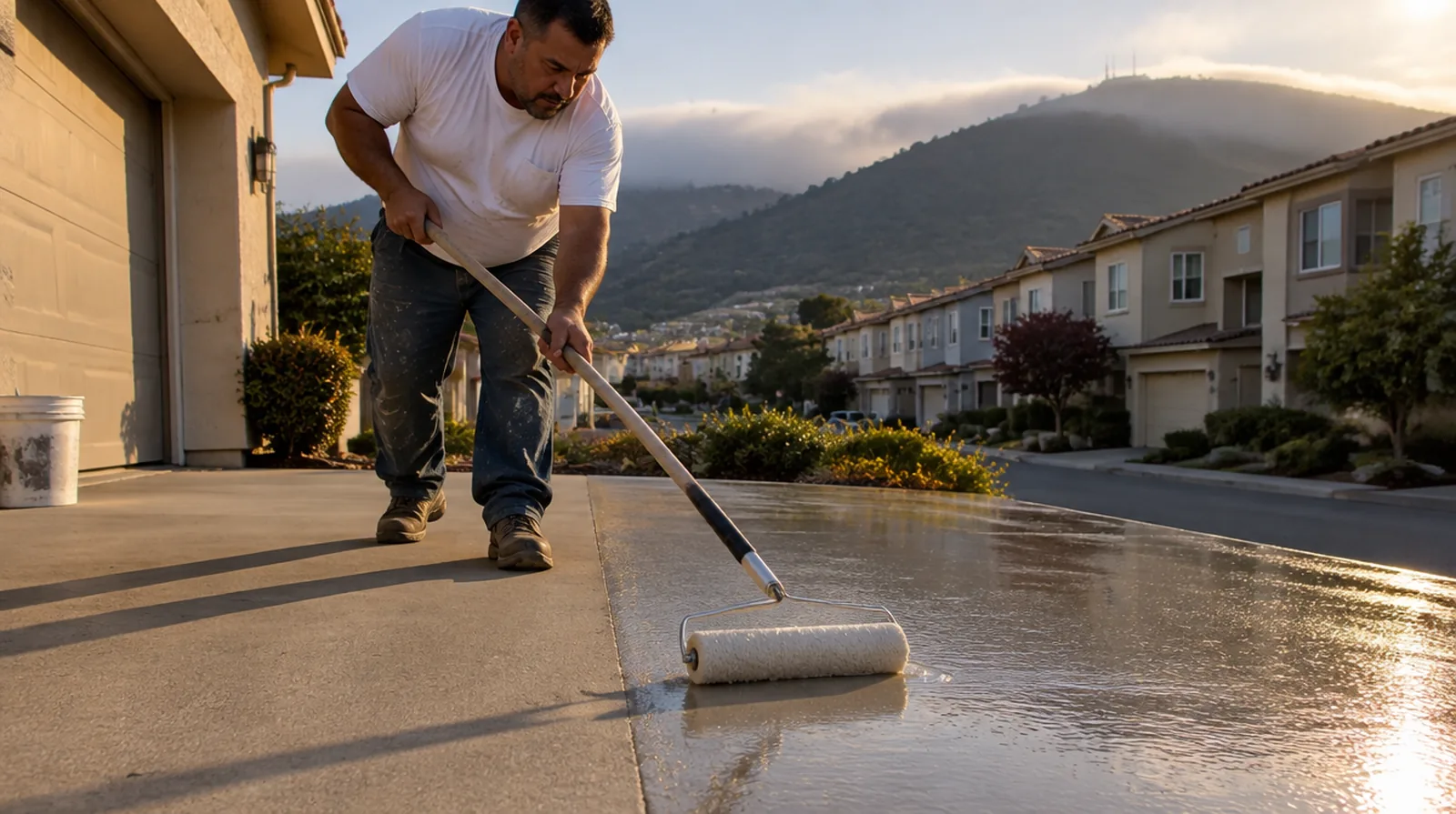
Why seal in South City
Concrete that stays wet grows moss and algae and stains easily. A breathable penetrating sealer reduces water absorption without trapping moisture.
What we seal
Driveways, front steps, walkways, patios and loading areas.
Our process
We clean, treat organic stains, let the concrete dry and apply sealer.
Will it stop moss?
It slows growth; regular cleaning still helps.
How often should I reseal?
Every few years.
Steep front steps on the west side
Homes in neighborhoods like Westborough often have long runs of concrete steps up to the front door. Those steps stay damp in the fog and can turn green and slick. We clean them thoroughly, let them dry, then apply a sealer that keeps the natural texture so the steps stay grippy. A light grit can be added to topical sealers if needed.
Loading areas and drive aprons
Commercial aprons near the airport see heavy trucks and oil drips. Sealing helps keep fluids on the surface for cleanup.
Concrete sealing in South San Francisco's marine air
Fog off the ocean keeps many slabs damp for long stretches, especially on the west side and under trees. That moisture feeds moss, algae and dark staining, and it carries salt that wears at the surface. A good sealer slows water uptake so the concrete dries faster and cleans easier. We pick breathable products where slabs need to release vapor and tougher films where oil and tire traffic dominate.
Picking the right day
Sealer needs a dry surface and a few dry hours after it goes on. We watch the forecast and the fog pattern, often working late morning into afternoon when the marine layer has burned off. If a slab is still damp we wait rather than trap moisture.
More sealing questions
Can you seal a shared walkway in a condo complex? Yes, with notice to residents and sections closed in turn so people can still reach their doors.
Will sealing change the color? Penetrating products barely change it. Acrylics can darken slightly.
Moss on shaded steps
North-facing steps and paths under trees stay wet the longest and grow slick green film. We scrub and treat the growth first, let the concrete dry fully, then seal it so it sheds water faster. That does not make moss impossible, but it slows it a lot and makes regular cleaning far quicker. Trimming branches to let in more light helps too. For steep steps we can mix a fine grit into the final coat so footing stays secure when the fog rolls in and leaves the surface damp.
Sealing steep South City driveways
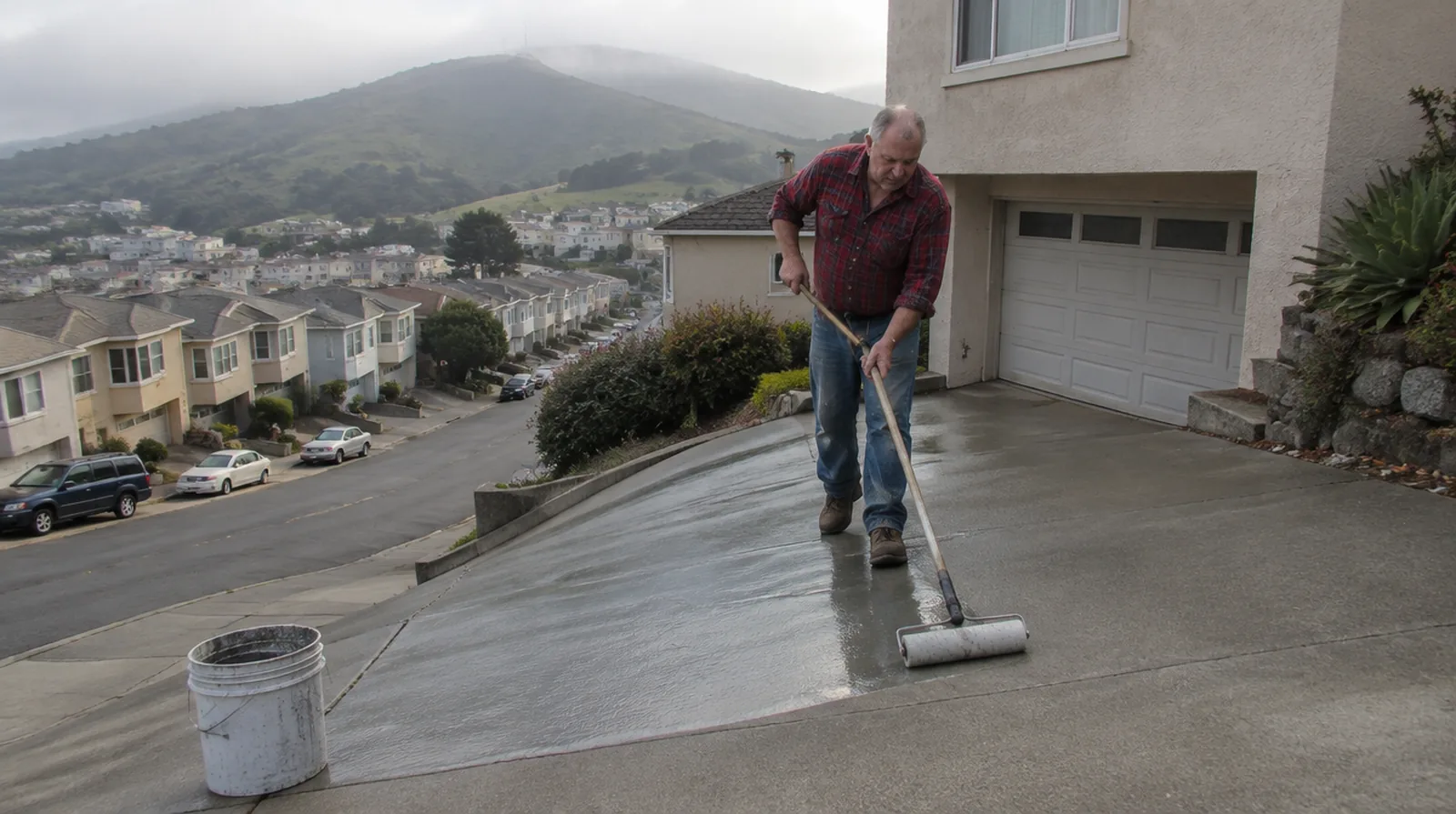
Steep driveways are common in hillside neighborhoods around South San Francisco. They take car traffic, rain runoff and oil drips, and sealing helps protect them.
Grip comes first
On a steep slope, traction matters. We choose sealers with grip or add texture so cars and people do not slip on wet days.
Cleaning
We clean the driveway, treat oil spots and remove moss or algae before sealing. Shaded areas often need extra attention.
Water runoff
Rain runs down steep driveways toward the garage or street. Sealing helps reduce how much water soaks into the concrete.
Timing
We pick dry days and allow time for the sealer to cure before cars drive on it.
Parking
You will need to park on the street while the sealer cures. We help plan that ahead.
Resealing
We let you know signs that it is time to reseal.
Edges and the curb cut
The area where a steep driveway meets the sidewalk and street takes a lot of wear from tires and scraping bumpers. We look for cracks and broken edges there and point them out so they can be repaired before sealing.
Front steps and walks
Many homes on the hills have concrete steps leading up to the front door. They stay damp in the fog and can grow moss in shady spots. Sealing them at the same time as the driveway keeps the look consistent and makes cleaning easier.
Seal your concrete
Call (650) 540-7824.