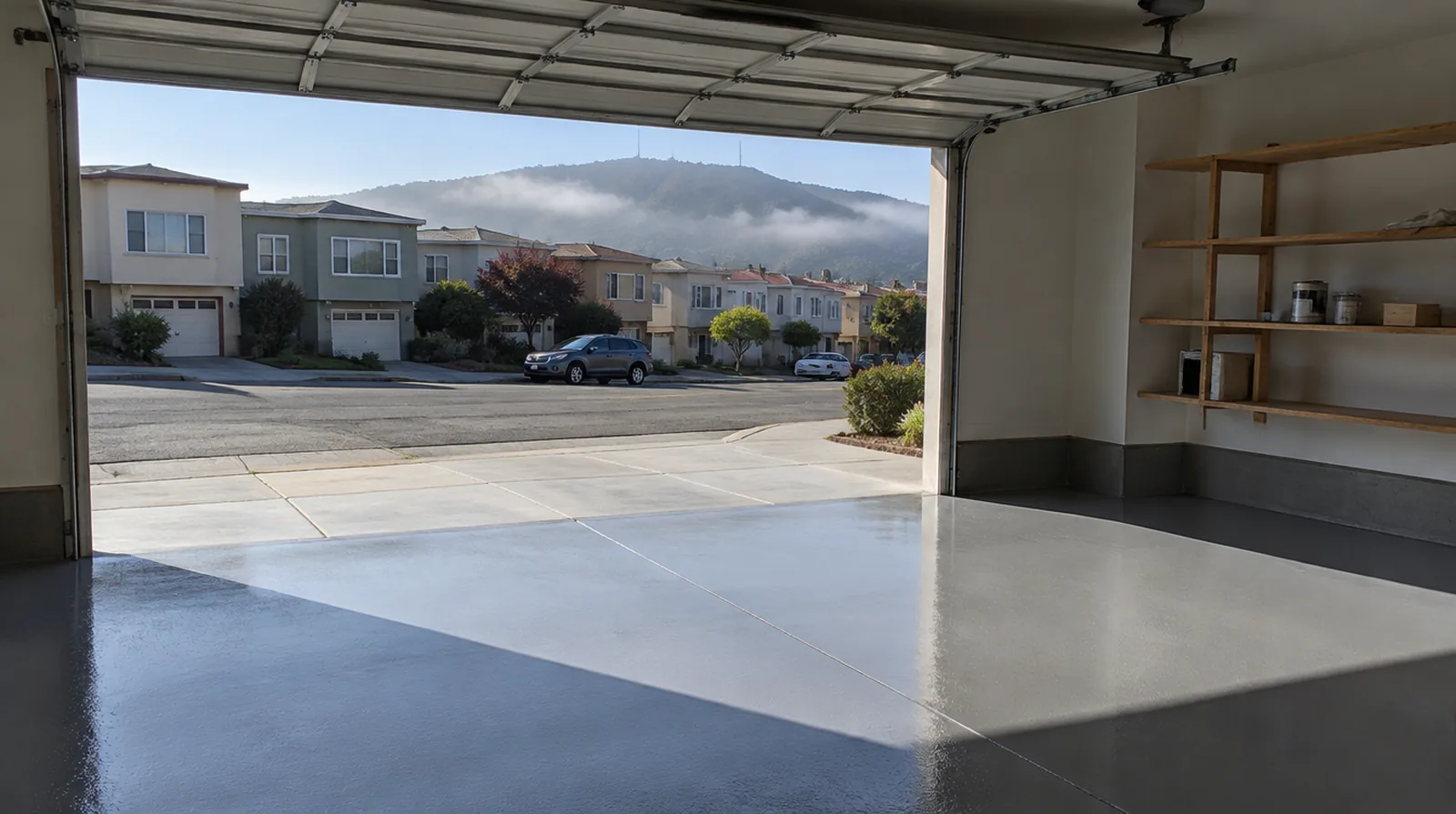
Why damp garages need a different approach
Fog and wind keep the west side of town cool, and garages tucked under the house rarely get sun. The slab can hold moisture for months. A coating rolled onto that kind of concrete without testing will often blister or peel. So the first thing we do is measure. The reading tells us which primer to use, and in rare cases, that a coating should wait.
Building your floor
Diamond grinding removes the old surface and anything on it. Cracks and chips get filled. A primer matched to the moisture level goes down, followed by the color coat and, if you want, colored chips. The clear topcoat finishes the job.
Small garage, big difference
In a single-car garage, every inch counts. A light-colored floor reflects light and makes the space feel larger. Spills from the washing machine or water heater wipe up instead of soaking in. Storage on the walls keeps the floor easy to clean.
Grinding safely
Our grinders connect to vacuums because concrete dust contains crystalline silica. OSHA explains the health concern.
How long is the install?
About two days, and roughly a week before parking with an epoxy topcoat.
Can you work around the water heater?
Yes. We coat around stands and fixtures.
Garage floor epoxy in South San Francisco homes
Garage floor epoxy in South San Francisco has to handle cool, damp air and slabs that may hold moisture for long periods. That is why we test before we coat and choose primers that tolerate damp concrete. Once the floor is in, it brightens the room and makes oil drips and dust easy to clean.
Garage questions
My garage door seals poorly. Is that a problem? Wind can push grit in during install, so we tape and block gaps for the day.
Can you coat a garage below living space? Yes. We ventilate and choose low-odor products where needed.
Will the floor sweat in foggy weather? Any smooth floor can show condensation. Texture helps with grip.
Making a tuck-under garage brighter
Many homes in Westborough and Buri Buri have garages tucked under the living space with little natural light. A light gray or tan floor bounces back the light you do have and makes the room feel larger. Pair it with LED fixtures and the space becomes far more pleasant to use for laundry or projects. We can recommend a finish that stays easy to clean without becoming too glossy.
Testing slab moisture before coating a South City garage
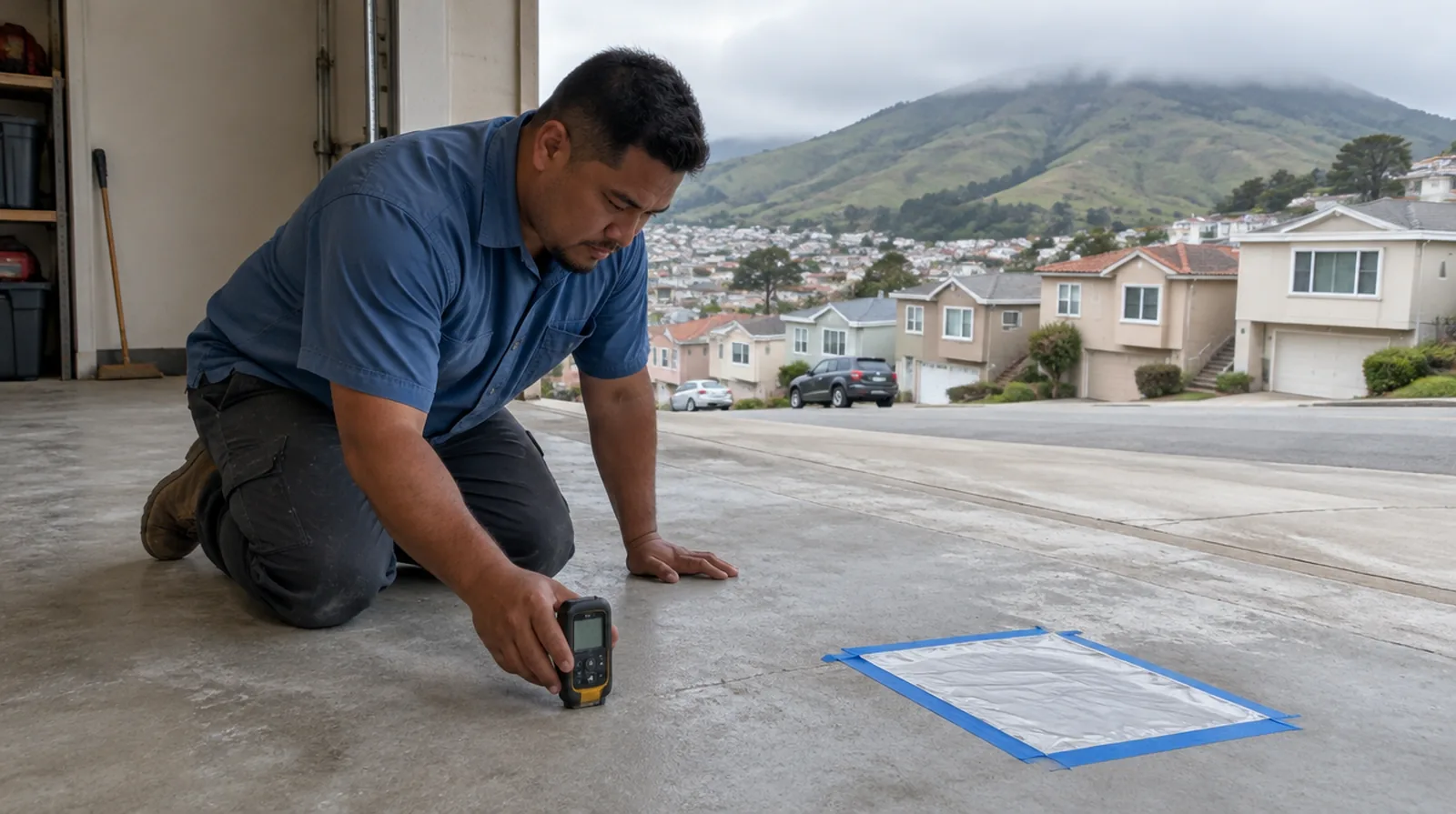
Moisture is one of the most common reasons garage coatings fail, and South San Francisco's cool, foggy climate makes testing important. We check before we coat, not after.
Why moisture matters
Concrete is porous. Water from the soil can move up through the slab and push against a coating from underneath. Over time, that can cause bubbles, peeling or a cloudy look under the topcoat.
How we test
We use a moisture meter in several spots across the slab. In some cases, we also tape down a plastic sheet and check it later for condensation. These tests give us a picture of how much moisture the concrete is releasing.
Where problems show up
Tuck-under garages that sit partly below grade, slabs near hillside drainage and floors next to planters are common trouble spots. Dark patches, white powder or a musty smell are signs worth mentioning.
What we do with the results
If the slab is dry enough, we move ahead with a standard system. If readings are high, we recommend a moisture-tolerant primer designed to handle vapor coming up through the concrete. In rare cases, we may suggest fixing drainage first.
Things you can do
Keep gutters and downspouts flowing away from the house and make sure planters near the garage are not flooding the soil next to the slab.
Peace of mind
Testing takes a little extra time, but it helps avoid problems later. We share the results with you and explain how they affect the plan.
Brighten up your garage
Call (650) 540-7824 for a free estimate.