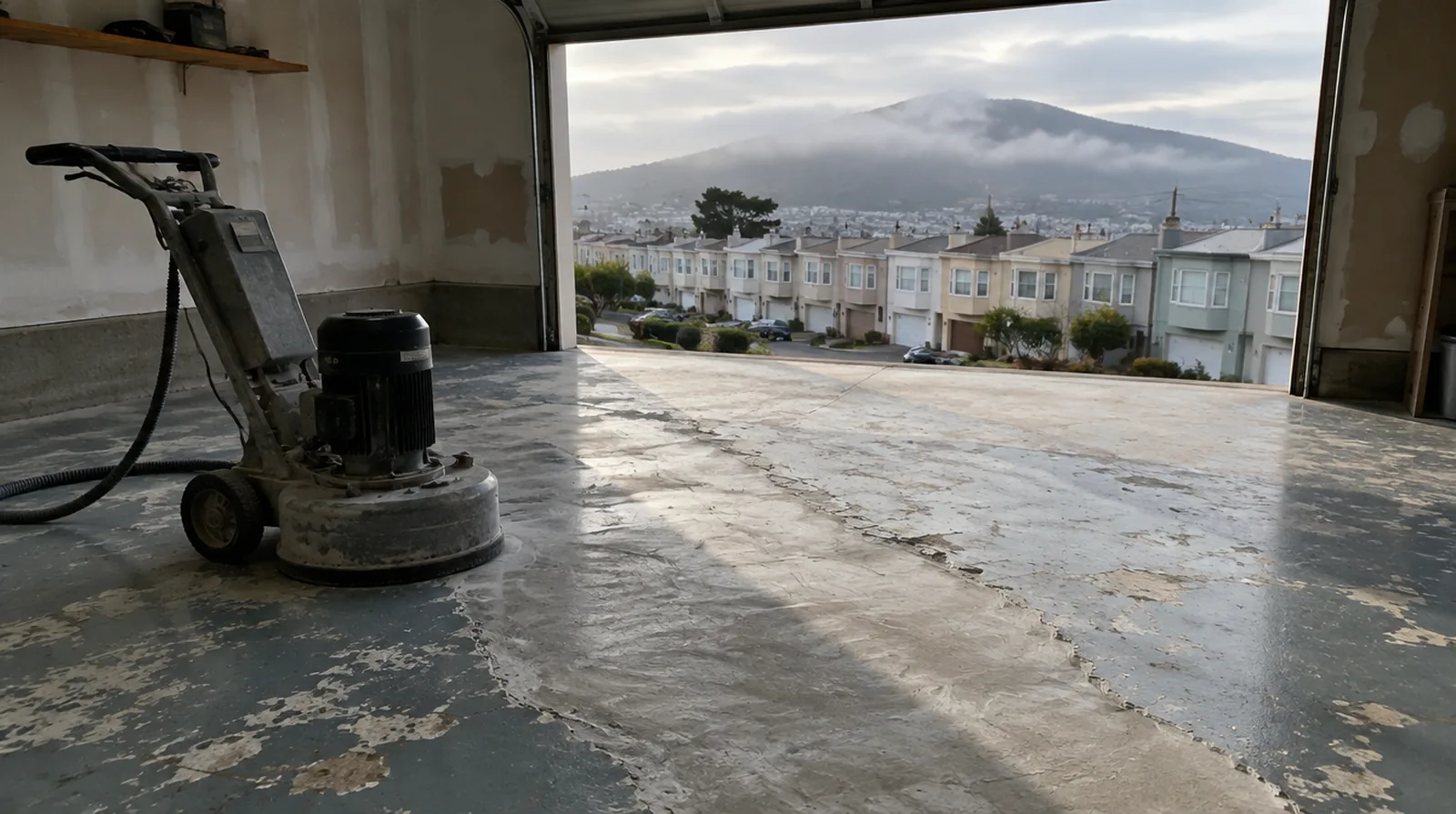
Typical problems
Blisters on garage floors under the house, coatings peeling in tire paths, worn traffic lanes in warehouses and chipped areas around equipment.
Our process
We measure moisture, check adhesion and look at the pattern of failure. Then we remove what has failed, grind and repair the concrete and recoat with a system designed for the conditions.
Commercial repairs
In busy facilities, we can repair one zone at a time and use fast-curing products to limit downtime.
A good finish
A chip floor hides repair lines well.
Why does my coating blister?
Moisture vapor or trapped air from poor prep.
Can you repair just one area?
Often, though matching color can be hard.
Hot tire pickup in commuter garages
Cars coming off 101 or 280 arrive with warm tires. A weak coating can soften and stick to them, leaving bare spots. Proper grinding and a quality topcoat stop that.
Epoxy floor repair in South San Francisco
Damp slabs, salty air and hot tires all test a coating. When a floor in South City starts flaking, bubbling or lifting, we look for the cause before quoting a fix. Moisture under the coating, poor grinding before the original install and impact damage from tools or equipment are the usual culprits.
What we check on a repair visit
We pull loose sections to see what is on the back, test moisture levels and tap the surrounding coating to find hollow spots. That tells us whether a patch will hold or whether the floor needs a full redo with a moisture-tolerant primer.
Repair questions
Can a peeling floor in a rental be fixed between tenants? Often yes. Many repairs fit in a short window.
Will the patch match? We try to match closely, and a fresh topcoat over the whole floor evens out the look.
Can you repair a lab floor? Yes, with a system chosen for the chemicals used there.
Coatings lifting near the garage door
The strip just inside the door is where repairs most often start. Rain blows in, grit gets ground in by tires and the edge of the coating takes the hit every time the door closes. Once water gets under that edge, the coating can lift further into the room. We cut back to sound material, grind the area, repair any spalled concrete and recoat it with a tougher edge detail. Adding a good door seal at the same time keeps water out and protects the repair. Many owners also ask for a contrasting stripe at the threshold so the edge is easy to watch over time.
Grinding off a blistered coating in South San Francisco
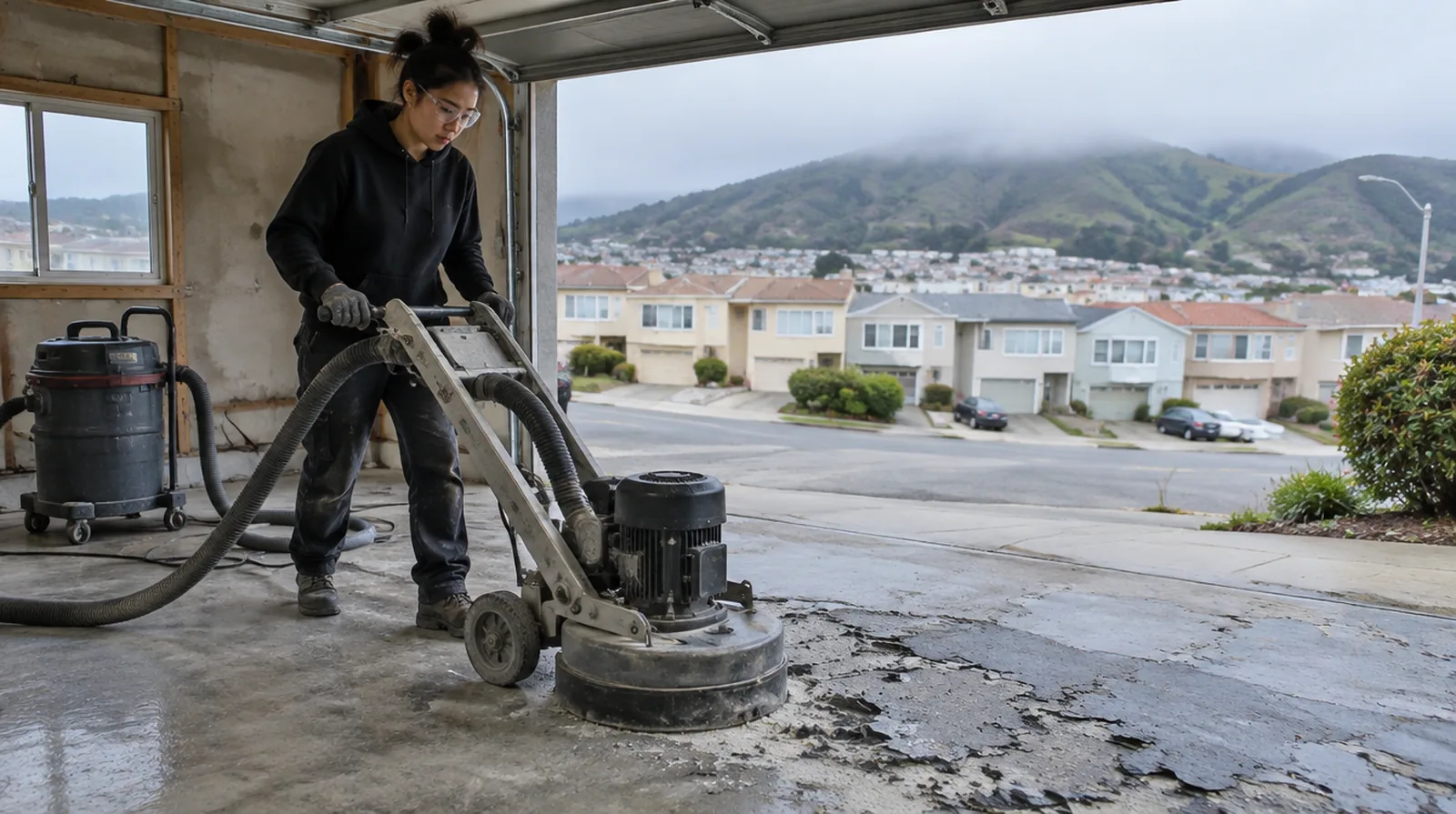
Blisters and bubbles in a garage coating are a common call we get in South San Francisco. They often point to moisture coming up through the slab or a coating that went down without proper prep.
What causes blisters
When moisture pushes up from below, it can lift a coating that was not designed to handle it. Thin products over smooth, unground concrete are especially at risk.
Removing the old coating
We grind away blistered and loose areas. If the problem is spread across the floor, we often remove the whole coating so the new system has a clean start.
Testing before recoating
After grinding, we test the slab for moisture. That tells us which primer and system to use for the new floor.
Repairing the concrete
Pits, cracks and rough spots are filled and ground smooth before recoating.
Choosing the new floor
We walk through options, including flake, solid color and polyaspartic tops, and explain how each handles moisture.
Photos help
Send photos of the blisters and the whole floor so we can give you a sense of the work before visiting.
Avoiding a repeat
The best way to avoid blisters coming back is to fix the cause. That might mean better drainage outside, a different primer or a thicker system. We explain what we found and why we recommend each step.
Fix a failing floor
Call (650) 540-7824.